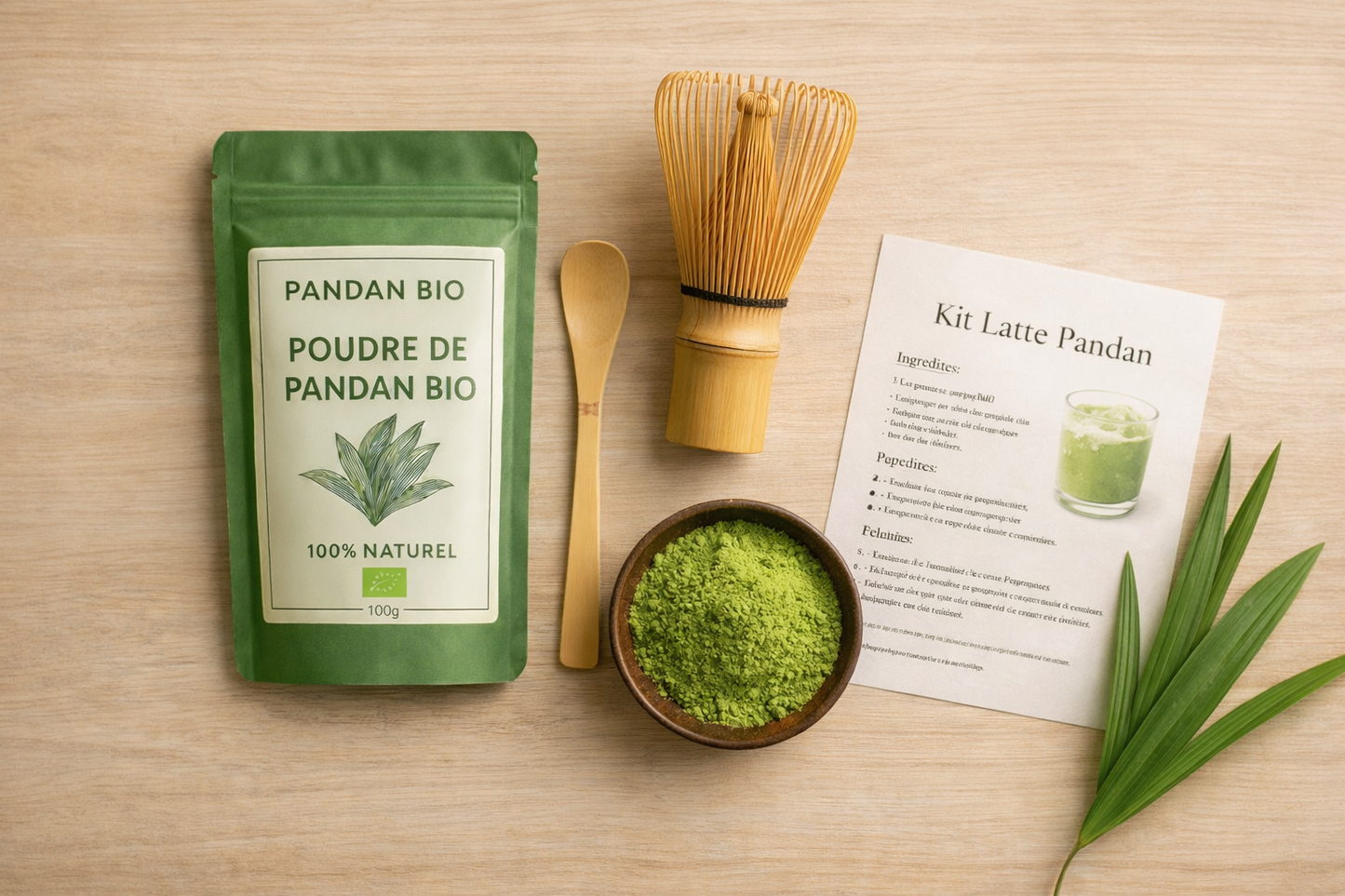
What is pandan? Origins, flavors, and uses
Pandan (Pandanus amaryllifolius) is a tropical plant native to Southeast Asia, widely used in Thailand, Indonesia, Malaysia, and the Philippines. Highly prized for its captivating fragrance and culinary uses, pandan is nicknamed“Asian vanilla,” as its sweet, floral, and slightly herbaceous notes make it an essential ingredient in many recipes.
🍃 A unique natural fragrance
Pandan leaves give off a subtle aroma reminiscent of vanilla, almond, and jasmine. They can be used fresh, dried, in powder form, or as an extract. When brewed as a tea, pandan imparts a mild, soothing flavor; in cooking, it delicately flavors savory dishes such as rice and curries, as well as desserts and beverages.
🍰 Pandan in cooking: a star ingredient
In Asian cuisine, pandan is an essential ingredient:
-
It naturally colors baked goods, such as pandan chiffon cake, with a vibrant, 100% natural green hue.
-
It is used to flavor rice, sauces, creams, and plant-based beverages.
-
In Europe, it is starting to win over fans of creative cuisine, vegans, and those who avoid artificial colors.
🌱 Pandan and Well-being
In addition to its fragrance, pandan is rich in antioxidants and has traditionally been used in Asian medicine for its digestive and relaxing properties. It fits perfectly into a natural and healthy diet.
🌏 An invitation to a culinary journey
Embracing pandan opens the door to new sensory experiences. It also means choosing an organic, authentic ingredient that honors tradition and is perfectly suited to current trends: plant-based cuisine, superfoods, wellness…
📌 Conclusion
Pandan is much more than just a flavoring: it’s a natural superfood that bridges tradition, culinary innovation, and wellness. Add it to your dishes for a unique and fragrant touch… naturally.
👉 You can find ithere