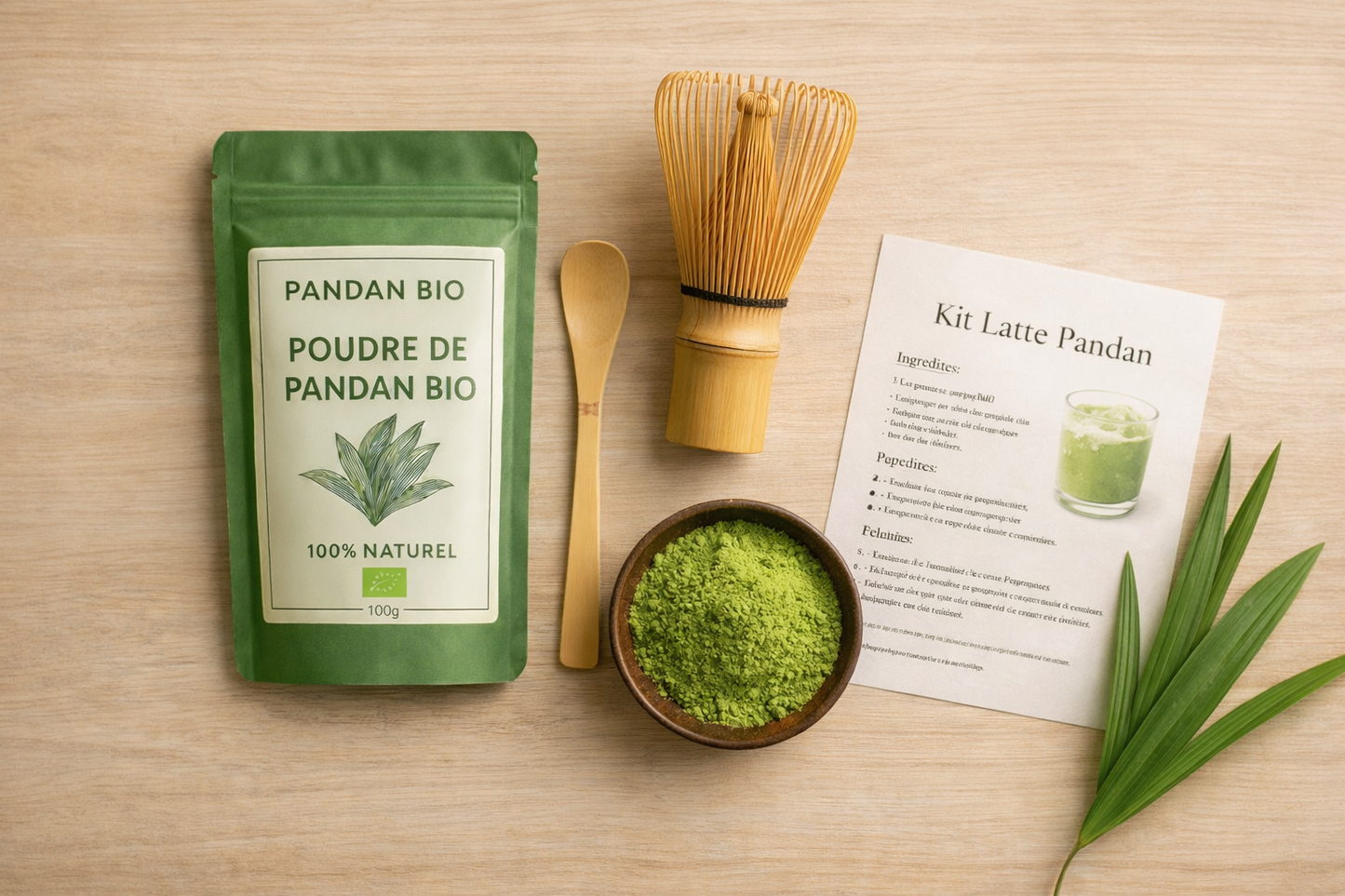
Can you eat pandan every day?
Pandan is becoming increasingly popular in Europe, particularly in powder form, in beverages and desserts. Its mild flavor and lack of caffeine make it a popular alternative to certain more stimulating plant-based powders. However, one question comes up time and again: Is it safe to consume pandan every day?
To answer this question, it is necessary to distinguish between traditional practices, available scientific data, and the general principles of a balanced diet.
Is pandan eaten every day in Asia?
In many Southeast Asian countries, pandan has been a staple of the daily diet for generations. The leaves are used to flavor rice, desserts, beverages, and certain coconut milk-based dishes. This regular consumption typically involves small amounts, incorporated into a variety of meals.
This long-standing cultural use suggests that pandan, when used as a food ingredient rather than in concentrated form, is generally well tolerated by the majority of the population.
Is it safe to eat pandan every day?
To date, there is no evidence to suggest that moderate daily consumption of pandan poses a health risk. Pandan does not contain caffeine, is not classified as a toxic plant, and is not associated with any major adverse effects when consumed as part of a normal diet.
As with any aromatic plant, any reported side effects are most often linked to excessive consumption or the use of low-quality processed products containing additives or artificial colors.
How much pandan can you consume on a daily basis?
There is no official recommended daily intake for pandan. In practice, the amounts used in cooking or beverages are small. A light infusion, a pandan latte, or occasional use in baking are all within reasonable limits.
The most appropriate approach is to view pandan as a flavoring ingredient, rather than as a product to be consumed in large quantities for specific health benefits.
Pandan in Daily Life and a Balanced Diet
Incorporating pandan into your daily routine can add variety and enhance your enjoyment of food, especially for those looking to cut back on caffeine. However, no single food should be consumed exclusively or presented as indispensable.
Pandan is an ideal addition to a varied diet, alongside other plant-based ingredients, fruits, vegetables, and sources of complementary nutrients.
Precautions to take when consuming regularly
The main concern is product quality. Some pandan powders available on the market contain artificial flavors or green food coloring intended to enhance the color or scent. These additives may be less well tolerated than natural pandan.
For daily use, it is best to choose a powder made exclusively from pandan leaves, with no additives, and to limit consumption to traditional culinary uses.
Eating pandan every day: what should you know?
Pandan can be consumed daily as part of a normal diet, provided it is eaten in moderation and high-quality products are chosen. Its traditional uses and the absence of any major adverse effects suggest that it is generally well tolerated.
However, it is not an ingredient with proven therapeutic effects. Its main appeal lies in its taste, its lack of caffeine, and its ability to enhance culinary preparations without being overpowering.
Conclusion
It is safe to consume pandan every day when used as a flavoring ingredient in moderate amounts. The key is to maintain a varied diet and choose natural products that haven’t been overly processed.
For those with sensitivities or in cases of uncertainty, occasional and gradual consumption remains the best approach, as with any new food.