What does pandan taste like? A detailed description and comparisons
Pandan is often described as an aromatic plant with a unique flavor that’s hard to compare to any other ingredient. For those who’ve never tasted it, one question always comes up: what does pandan actually taste like?
In this article, we provide a detailed sensory description of the taste of pandan, along with helpful comparisons to better understand its flavor profile and know what to expect before using it.
The taste of pandan: a flavor that's hard to pin down
Pandan does not have a distinct or overpowering flavor like some spices. Its taste is primarily aromatic, mild, and rounded. It is often perceived as slightly sweet, even though it contains no sugar, with a very subtle vegetal note.
This subtle nature explains why some people have trouble identifying it right away, especially when it is used in small amounts or in rich dishes.
Check out our natural pandan powder!
What does pandan taste like?
When describing the taste of pandan, several comparisons often come up. It is frequently likened to vanilla for its sweetness, to almonds for its slightly milky quality, and to coconut for its exotic richness. These comparisons are, however, only approximate, as pandan has its own distinctive flavor profile.
Unlike vanilla, pandan is neither sweet nor warm. Unlike almond, it isn’t rich. And unlike coconut, it never overpowers other flavors. It acts more as a fragrance than as a dominant flavor.
The taste of pandan depending on its form
The flavor of pandan varies depending on its form. Fresh leaves offer the most intense and complex aroma. When steeped, they gradually release their aromatic notes.
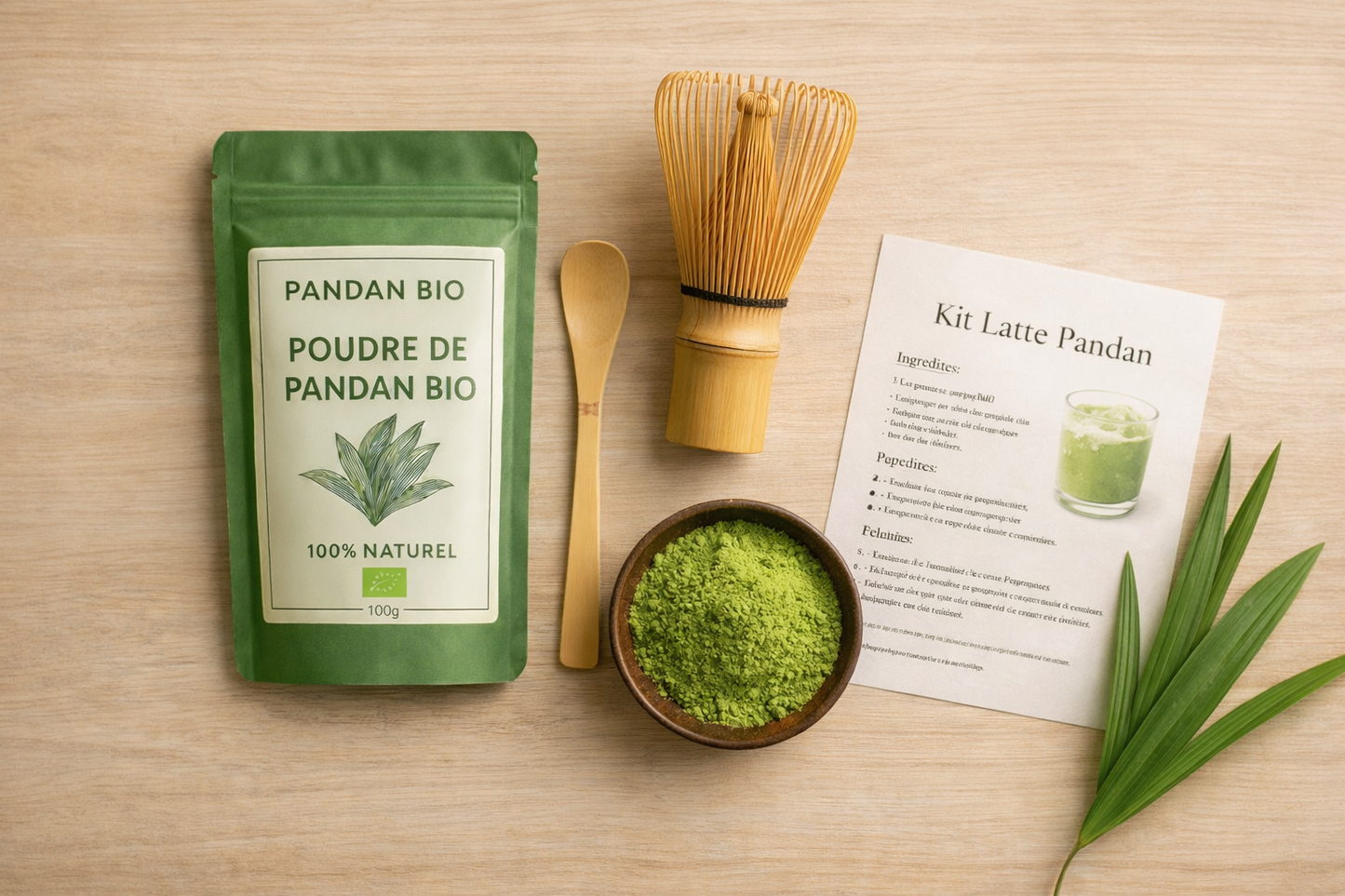
Pandan powder has a more concentrated flavor, though it can sometimes be subtler, depending on its quality and how it was processed. A natural, well-preserved powder retains its authentic aroma, while poor-quality powder may taste bland.
Pandan and aromatic intensity
Pandan is often misunderstood because it is used as a strong spice, when in fact it is a subtle aromatic ingredient. Its flavor should not be overpowering or overpowering.
When used in the right amount, pandan imparts a fragrant, elegant aroma that lingers in the background. It is precisely this subtlety that makes it so distinctive and appealing in cooking.
Why some people can't taste pandan
There are several reasons why the pandan flavor may sometimes be imperceptible. The most common causes include using too little, using low-quality powder, or failing to mix it thoroughly into the mixture.
The flavor profile also plays a role. In a very sweet or very rich dish, the pandan flavor can take a back seat. Conversely, in a hot beverage or a light milk-based drink, its aroma is more easily detectable.
Pandan: Taste and Expectations
Pandan can be a bit of a letdown if you’re expecting an intense or immediately recognizable flavor. It’s more appealing when viewed as a culinary fragrance, intended to add a subtle, refined aromatic touch.
This difference in expectations explains why pandan is particularly prized in Asian cuisines, where balance and subtlety take precedence over strong flavors.
Conclusion
Pandan has a mild, aromatic, and subtle flavor. It evokes notes of vanilla, almond, and coconut, without ever blending completely into them. Rather than a dominant flavor, pandan is a culinary aroma designed to enhance a recipe without overpowering it.
When properly understood and used, pandan reveals an elegant and unique aromatic profile, which explains its growing popularity among lovers of delicate flavors.
Check out our natural pandan powder!