Top 5 Trending Exotic Ingredients in 2026
Every year, new exotic ingredients take center stage on the global culinary scene. In 2026, a variety of products from Asia, Latin America, and Africa will captivate the palates of food enthusiasts and revolutionize the recipes of chefs and food bloggers. Whether thanks to TikTok, Michelin-starred chefs, or the quest for new flavors, here are 5 trendy exotic ingredients you absolutely must discover this year. Get ready for an exotic and informative culinary journey, perfectly in line with the editorial focus of our website pandan-bio.fr.
1. Pandan – The New Green Powder from Asia
Origin: A tropical leaf native to Southeast Asia (Thailand, Indonesia, etc.). Pandan is on its way to becoming as popular in Europe as matcha has been in recent years. Known as the “vanilla of Southeast Asia” for its floral, sweet, and herbaceous aroma, it is prized for its versatility in the kitchen.
Why it’s trending: Pandan offers a unique flavor (with notes of vanilla, almond, and fresh herbs) and a beautiful natural green color to dishes, without any bitterness or caffeine. It meets the demand for natural, healthy, and Instagram-worthy products. Rich in antioxidants and vitamins, it’s also part of the “superfood” trend. More and more baristas are offeringpandan lattes as an alternative to matcha lattes, and pastry chefs are using it to flavor puddings, cakes, and desserts. Even Nigella Lawson predicted its success by calling it the “next big thing” a few years ago. By 2026, pandan will have become a staple on café menus and in creative homemade recipes.
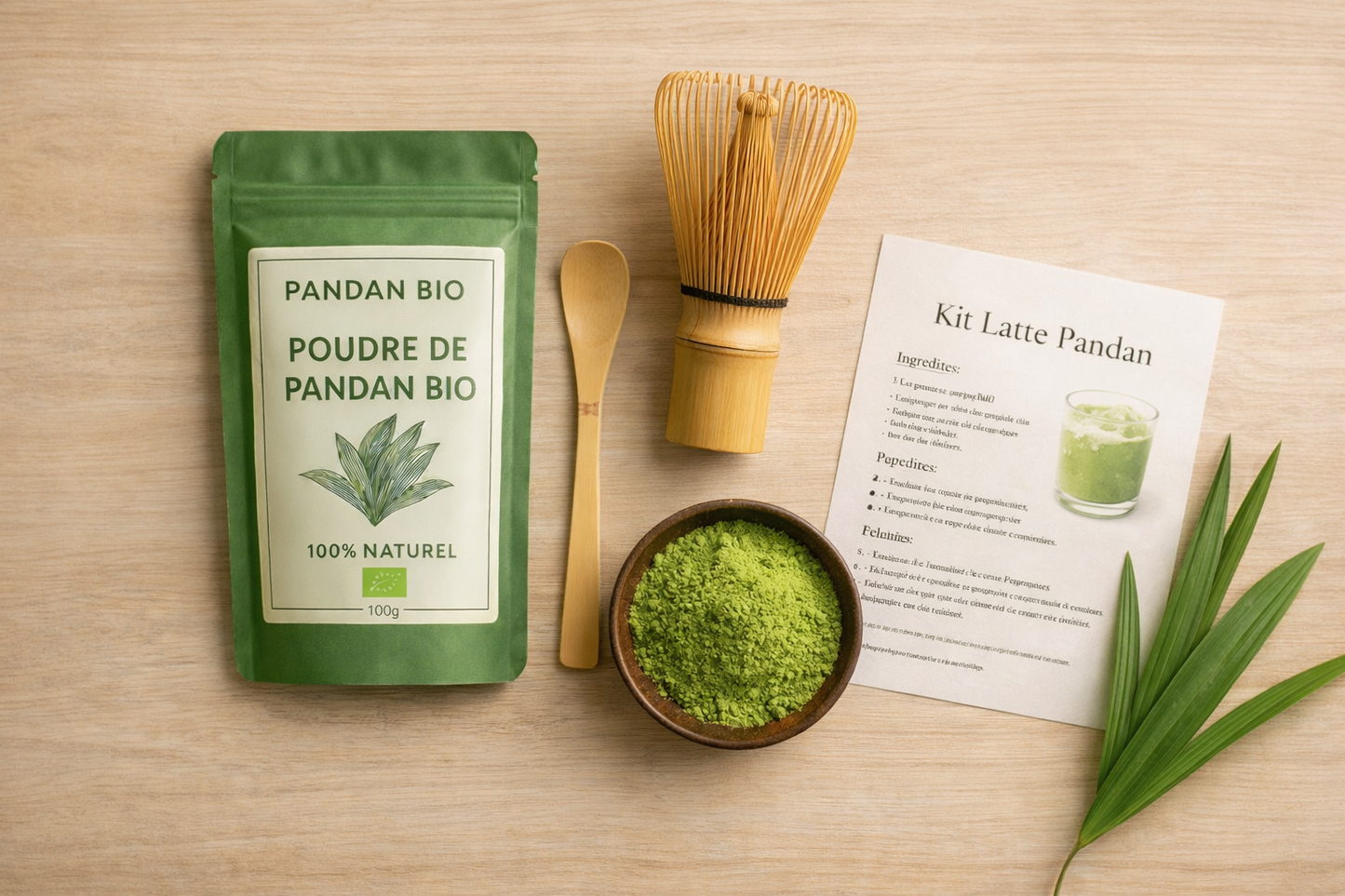
How to use it: In the form of pandan powder —the most convenient option—which can be added to beverages (lattes, smoothies) and desserts. Just a few pinches are enough to flavor a dish. You can also make pandan syrup or paste from the powder for specific recipes. For purists, fresh leaves (steeped whole) provide a more subtle flavor. Note that our organic pandan powder offers a simple way to incorporate this trendy ingredient into your daily life 😉.
2. Ube – The purple yam of the Philippines
Origin: A purple tuber (a variety of purple yam) highly prized in traditional Filipino cuisine.Ube has long been used in desserts in the Philippines ( halaya cream, ice cream, etc.), but it is now gaining global popularity thanks to its vibrant purple color and its many delicious variations.
Why it’s trending: Visually, ube is a true Instagram sensation. The hashtag #UbeEverything has racked up over 500 million views, showcasing pancakes, ice cream, lattes, and cocktails featuring its vibrant purple hue. Social media has propelled ube into the spotlight, and major brands are jumping on the bandwagon: you can find ube lattes in trendy coffee shops, ube-filled donuts, and even ube cheesecakes in modern bakeries. Beyond its color, its flavor is mild, with a hint of vanilla and an earthy undertone —very approachable and appreciated by a wide audience. Ube also offers an image of wholesome exoticism (it’s a root vegetable, a source of fiber and anthocyanin antioxidants that give it its purple hue).
How to use it: It is often sold as ube puree or paste (in jars), which is already sweetened and ready to use in desserts. It is also available as a dehydrated powder that can be rehydrated in milk. You can make an ube latte by mixing ube paste with milk (like a flavored syrup). In baking, ube is incorporated into cake batters, creams, and frostings to add a unique color and flavor. Consider pairing ube with coconut milk (a classic combination in the Philippines) or using coconut as a topping to enhance its flavor.
3. Moringa – The Miracle "Superfood" Leaf
Origin: Leaves of the Moringa oleifera tree, native to India and Africa. Known as the “tree of life” or “nectar of the gods,” moringa has been used for centuries in Ayurvedic medicine and traditional cuisine for its exceptional nutritional properties.
Why it’s trending: Following in the footsteps of matcha, spirulina, and chlorella, moringa is establishing itself as a natural superfood sought after by consumers looking for health and sustainability. Its leaves are extremely rich in vitamins (A, C, E), minerals (calcium, iron), and protein:contentReference. By 2026, the moringa market will boom, driven by powders for smoothies, detox teas, and green dietary supplements. Moringa checks all the boxes for current trends:natural energy, antioxidant benefits, and a sustainable plant-based source. Its taste is green and slightly spicy, somewhat reminiscent of watercress or wheatgrass, which blends well with other fruity flavors in beverages.
How to use it: Mainly as dried moringa powder, which can be added to a smoothie, a glass of juice, soup, or bread dough. Just one teaspoon a day is enough to reap its benefits. Moringa herbal teas are also available, either on their own or blended with other herbs, and are best enjoyed hot. In cooking, the powder can be used as a seasoning (in a curry or as an alternative to pesto). To mellow its strong herbal flavor, it’s often paired with citrus fruits or mint. Since moringa is very concentrated, it’s best to start with small amounts to get used to its flavor.
4. Yuzu – The Japanese citrus fruit that adds a touch of fragrance to everything
Origin: A citrus fruit native to the Far East (Japan, Korea). The yuzu is a small, bumpy yellow-green citrus fruit with a highly aromatic juice that combines notes of lemon, mandarin, and grapefruit. Long confined to Japanese cuisine (ponzu, desserts), it has become increasingly popular in Western cuisine in recent years.
Why it’s trending: Exotic citrus flavors are all the rage in drinks and desserts, and yuzu is leading the way. Its complex aroma, both tangy and floral, adds a sophisticated touch to dishes. In 2026, yuzu is everywhere: in cocktails (yuzu sour, yuzu tonic), pastries (tarts, madeleines, yuzu ice cream), and even derivative products like yuzu mayonnaise or flavored beer. It meets the demand for “globalist” flavors: offering a new yet comforting taste experience (since the citrus fruit is familiar). Plus, yuzu is rich in vitamin C and antioxidants, which is a definite bonus. Chefs appreciate how a small dose of yuzu transforms a dish by giving it zing and character.
How to use it: Since fresh yuzu is rare and expensive outside of Asia, it is mainly used in the form of pasteurized yuzu juice (bottled) or dried yuzu zest powder. A few drops of yuzu juice can replace lemon in a vinaigrette, add a zesty kick to ceviche, or flavor a chocolate ganache. Yuzu zest (or peel) is used as a spice: for example, sprinkled on grilled fish or infused in soy sauce (it is the key ingredient in ponzu, the Japanese soy-lemon sauce). Be careful not to overdo it—yuzu is very aromatic: use it sparingly so it doesn’t overpower other flavors.
5. Dragon Fruit (Pitaya) – The Flashy Tropical Fruit
Origin: The fruit of the Hylocereus cactus, native to Central America but now widely cultivated in Southeast Asia. Also known as dragon fruit or pitaya, it comes in varieties with white or bright fuchsia flesh (the red variety is particularly popular for its striking appearance).
Why it’s trending: In the “Instagram-worthy tropical fruits” category, dragon fruit reigns supreme alongside mango. Its bright pink color, dotted with tiny black seeds, makes it a staple in many smoothie bowls and cocktails with spectacular hues. More than half of the new “refreshers” (flavored cold drinks) launched in recent years contain dragon fruit or mango, a sign of its immense popularity among young consumers. By 2026, dragon fruit will be found in summer drinks (e.g., pink dragon lemonade), ice cream, exotic fruit salads, and even cosmetic lines (for its fun and vitamin-packed appeal). Its flavor is actually quite subtle, slightly sweet with notes reminiscent of kiwi or pear, making it easy to pair with other ingredients without throwing off the balance of recipes. Dragon fruit also fits the “healthy tropical” trend: it’s hydrating, a source of vitamin C and fiber, and low in calories.
How to use it: When fresh, dragon fruit can be cut in half and eaten with a spoon, or diced and added to a salad. For a trendy twist, freeze-dried red pitaya powder is very popular: it’s used to give smoothies, yogurt, and cocktails a bright pink color (without adding much flavor, just a slight sweetness). You can make a “pitaya bowl” by blending pitaya powder with plant-based milk, a frozen banana, and yogurt to create a thick, bright pink smoothie, topped with fruit and granola. In baking, pitaya puree or juice can naturally color icings or sponge cakes. Finally, don’t hesitate to use dragon fruit in salsas or ceviches to add a colorful and refreshing touch to savory dishes.
In conclusion
These five exotic ingredients illustrate how global cuisine is evolving in 2026: more color, unique flavors, and natural benefits on our plates. Whether it’s green pandan with its vanilla notes or purple ube with its sweet undertones, each brings a new creative dimension. Of course, all these trends can be adapted to suit your tastes. The key isto dare to experiment in the kitchen while staying true to the balance of flavors.
At pandan-bio.fr, we’re especially excited to see pandan join the list of exotic “must-haves” this year. This ingredient, which we know well, fits perfectly with today’s trend toward natural and unique flavors. Feel free to incorporate one or more of these products into your next recipes to delight your taste buds and those of your loved ones. 🌺🥭 Enjoy your culinary discovery!