The different forms of pandan: leaves, paste, powder, or extract—which should you choose?
🌱 Pandan: An ingredient with many uses
Native to Southeast Asia, pandan (Pandanus amaryllifolius) is an essential ingredient in tropical cuisine. But when you come across this plant in Europe, you often wonder: which form should you choose? Powder, paste, extract, leaves… each has its own unique characteristics.
Here is a guide to help you find your way around easily.
🍃 1. Fresh or dried leaves
Description:
– Long, dark green leaves; sometimes available in the fresh or frozen section.
Uses:
– Infusions, cooking with rice, wrapping meat or fish.
– Delicate aroma, not very sweet.
Benefits:
– A raw, natural product with no processing.
– A subtle, authentic flavor.
Limitations:
– Not very practical to store.
– Milder aroma than concentrated extracts.
🧴 2. Liquid pandan (extract or essence)
Description:
– A bright green liquid sold in bottles. Be aware of the ingredients: some versions are artificial.
Uses:
– To add color and flavor to desserts, beverages, and cakes.
Pros:
– Easy to use; just a few drops are enough.
– Highly fragrant; ideal for quick preparations.
Limitations:
– Some commercially available products contain artificial colors or flavors.
💡 Choose natural extracts that are free of additives and artificial colors.
🟢 3. Pandan powder
Description:
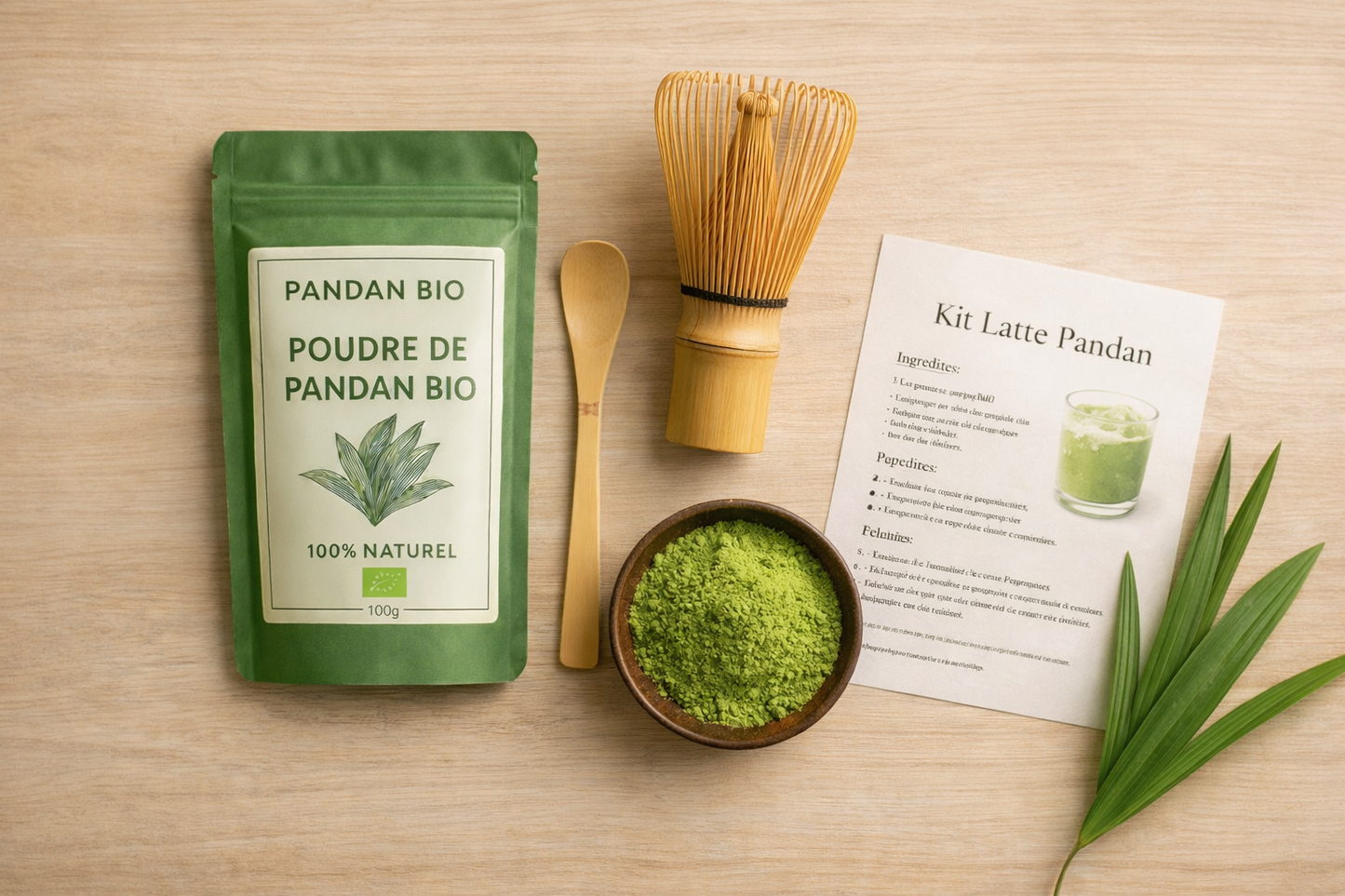
– A green powder obtained by drying and grinding the leaves. It is the most versatile form and the easiest to store.
Uses:
– In pastries, beverages, lattes, smoothies, pancake batter, sauces…
Benefits:
– 100% pure, easy to measure, long shelf life.
– Perfect for everyday culinary use.
Limitations:
– The aroma is slightly less intense than some extracts, but much healthier.
🛍️ E-commerce tip: If you sell pandan powder, recommend this form to your visitors for regular, natural use.
🧁 4. Pandan paste
Description:
– A mixture of crushed pandan leaves, often combined with sugar or oil.
Uses:
– Asian pastries (cakes, mochi, custards, etc.), creams, or toppings.
Benefits:
– Creamy texture, rich flavor, ready to use.
Limitations:
– Less versatile, sweeter, must be refrigerated.
🧭 How do I choose?
| Need | Ideal shape |
|---|---|
| Herbal teas, flavored rice | Fresh or dried leaves |
| Quick desserts, colorful drinks | Natural extract or paste |
| Everyday cooking, smoothies, homemade pastries | Pandan powder |
| Traditional Asian dishes | Pandan paste |
📌 Conclusion
There isn’t one form of pandan that’s better than the others—it all depends on your needs! For a versatile, natural, and convenient option, pandan powder is the ideal choice. It packs all the plant’s benefits into a convenient form that’s easy to use in the kitchen.