Pandan vs. Matcha: What Are the Differences Between These Two Green Powders?
Pandan or matcha? These two green powders look similar, but they’re worlds apart in terms of origin, taste, caffeine content, and uses. If you’re torn between the two—or looking for a caffeine-free alternative to matcha—this guide compares pandan and matcha side by side to help you make the right choice.
Often touted as an alternative to matcha, pandan is actually quite different, both in terms of its origin and its uses. In this guide, we compare pandan and matcha in a clear and objective way to help you choose the one that best suits your needs.
Origin and composition
Pandan: an aromatic tropical leaf
Pandan (Pandanus amaryllifolius) is a tropical plant native to Southeast Asia, particularly Thailand, Indonesia, and Malaysia. In cooking, its long green leaves are used—traditionally fresh or steeped—and today are often ground into a powder for greater convenience.
Pandan powder is made from the leaves and contains no caffeine. Its flavor profile is often described as a delicate blend of vanilla, almond, and coconut, which is why it is sometimes called the “vanilla of Asia.”
Matcha: Japanese ground green tea
Matcha is a green tea powder native to Japan. It is made from tencha leaves that are grown in the shade and then finely ground. Unlike a traditional tea infusion, the entire leaf is consumed in powder form, which concentrates the compounds naturally found in the tea.
Matcha contains caffeine and L-theanine, an amino acid that can provide a more gradual boost of energy. It is also known for its high antioxidant content, which comes from green tea.
Taste and aroma profile
The most obvious difference between pandan and matcha is in their taste. Pandan is prized for its mildness and well-rounded aroma, with no bitterness. It adds an exotic touch that blends in easily, even for those who aren’t used to intense plant-based flavors.
Matcha, on the other hand, has a grassy, umami flavor that can sometimes be slightly bitter, depending on its quality and how it’s prepared. Higher-quality matcha will be milder, but generally retains a distinct vegetal character.
Caffeine and Its Effects on the Body
Pandan: caffeine-free
Pandan contains no caffeine. It can therefore be consumed at any time of day, including in the evening, without causing any stimulating effects. This is one of the main reasons why it is an attractive alternative for people who are sensitive to caffeine.
Matcha: Gentle Yet Real Energy
Matcha contains caffeine. Its natural combination with L-theanine is often associated with a more sustained energy boost than coffee. That said, it’s still best to avoid drinking it late in the day if you’re sensitive to stimulants.
Nutritional benefits
Pandan and matcha have different nutritional profiles. Pandan is known for the natural pigments and antioxidant compounds found in its leaves, and is traditionally used to promote digestive comfort and relaxation. Matcha, on the other hand, is particularly renowned for its high concentration of green tea antioxidants and its benefits in routines focused on energy and concentration.
In practice, matcha is typically used as a more stimulating ingredient, while pandan is known for its milder flavor and is often chosen for its aromatic qualities and lack of caffeine.
Pandan or matcha: which is more economical?
Since 2024, the price of matcha has risen significantly on the European market, mainly due to declining harvests in Japan and global demand. Culinary-grade matcha now costs between €80 and €150 per kilogram, and ceremonial-grade matcha can exceed €300 per kilogram.
Pandan, on the other hand, remains more affordable: between €90 and €200 per kilo for organic powder, depending on the package size. When calculated per serving, the price difference widens: a cup of pandan latte costs between €0.15 and €0.30, compared to €0.40 to €1 for a high-quality matcha latte.
If you're looking for a green powder to add to your beverage routine without breaking the bank, pandan is a more budget-friendly option.
Uses in cooking and beverages
How do you use pandan?
Pandan is versatile. It is often used in hot or cold milk-based drinks, such as pandan latte, as well as in baked goods and desserts. It can also serve as a natural green food coloring, while adding a mild, aromatic flavor.
How do you use matcha?
Matcha is traditionally enjoyed whisked into hot water or as a matcha latte. It is also widely used in baking, where it adds a vibrant green color and a distinct tea flavor. Careful preparation helps minimize clumps and bitterness.
Pandan vs. Matcha: A Quick Comparison
| Criterion | Pandan | Matcha |
|---|---|---|
| Origin | A tropical leaf from Southeast Asia | Japanese green tea (ground tencha) |
| Caffeine | No | Yes |
| Taste | Mild, aromatic | Herbal, umami, sometimes bitter |
| Bitterness | Absent | Depends on quality and preparation |
| Uses | Drinks and desserts | Drinks and pastries |
| The perfect moment | All day | Preferably in the morning or early afternoon |
Keep in mind: Pandan is not an exact substitute for matcha. Rather, it is a complementary alternative—milder and caffeine-free—that works particularly well in indulgent drinks and desserts.
Pandan or matcha: which green powder should you choose?
If you're looking for an energizing drink rooted in the ancient tradition of green tea, matcha is the gold standard. If you prefer a mild, caffeine-free alternative with a rich, vanilla-like flavor profile, pandan stands out as the most versatile choice, especially for lattes, desserts, and creative recipes.
Many of our customers discovered pandan while looking for an alternative to matcha: they don’t use one to replace the other, but rather switch between them depending on the time of day and their mood.
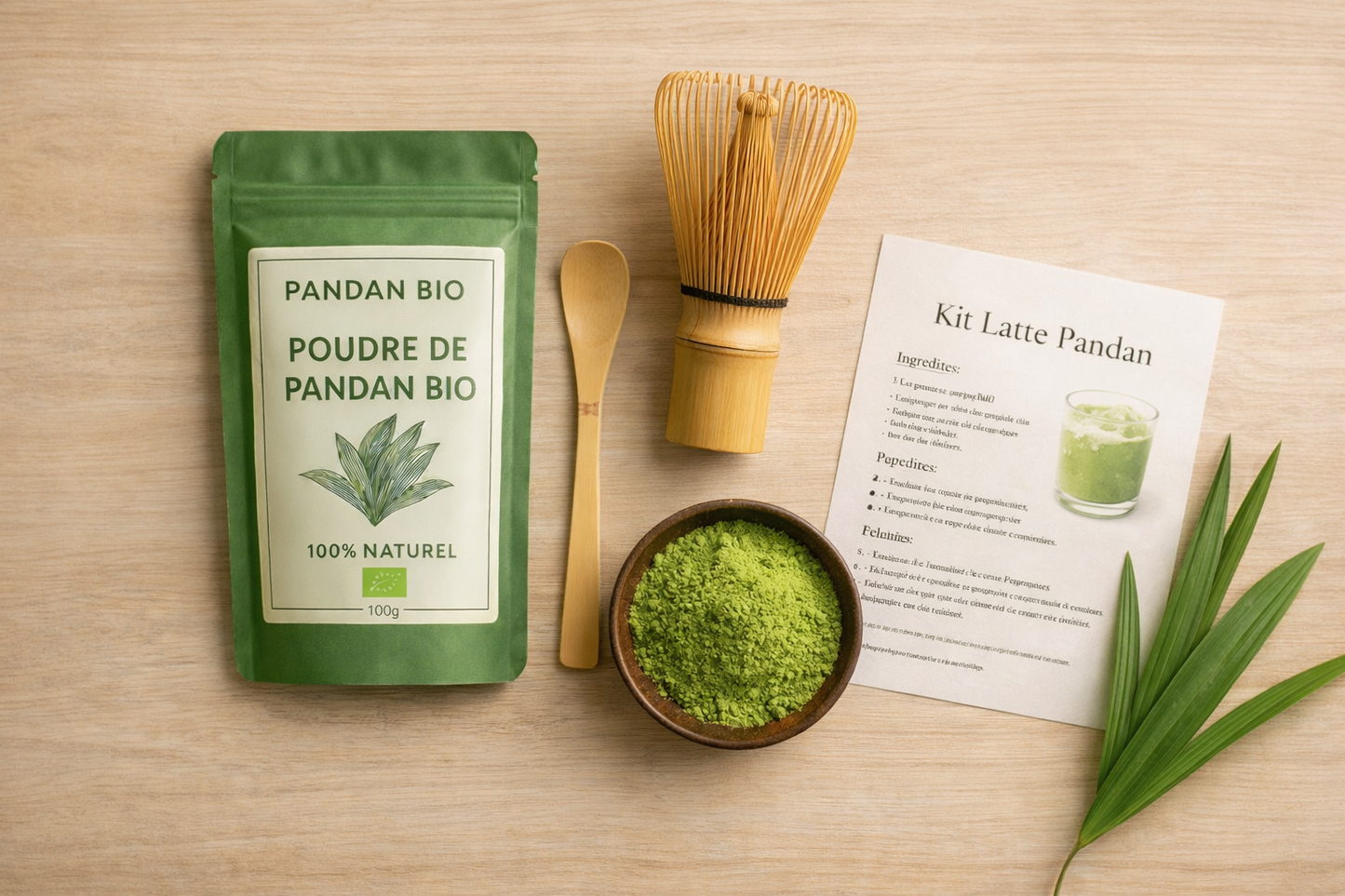
👉 To try pandan at home, check out our 100% pure organic pandan powder, finely ground in the Philippines and certified organic. For those with the highest standards, the complete pandan latte kit lets you make a barista-quality drink right at home.
Frequently Asked Questions About Pandan and Matcha
Can pandan really replace matcha? Pandan isn't an exact substitute: its taste, color, and composition are different. Instead, it offers a mild, caffeine-free alternative, perfect for those looking for a delicious green beverage without the stimulating effects.
Does pandan contain caffeine? No, pandan naturally contains no caffeine. Unlike matcha, it can be consumed at any time of day, including in the evening.
Do pandan and matcha taste the same? No. Matcha has a grassy, umami flavor that can sometimes be bitter. Pandan is sweet, with notes of vanilla, almond, and coconut. The two offer completely different taste experiences.
Which one is more expensive to use? Matcha is generally more expensive, especially since prices rose in 2024–2025. Pandan remains a more affordable option per serving.
Can you mix pandan and matcha? Yes. The "matcha pandan latte" has become a trendy drink in coffee shops: it combines the sweetness of pandan with the intensity of matcha, resulting in a well-balanced drink.
Pandan or matcha for baking? Matcha is more traditionally used in baking (macarons, cakes, ice cream) for its vibrant color. Pandan works better in light, vanilla-based recipes: chiffon cake, custards, pancakes, and milk-based drinks.
Does pandan have the same health benefits as matcha? Both are rich in antioxidants, but they come from different plant families. Matcha is particularly rich in catechins (EGCG). Pandan contains pigments and phenolic compounds and is traditionally associated with digestive comfort. These are two complementary nutritional profiles.
Conclusion
Pandan and matcha are two different green powders, each with its own distinct tradition. While matcha offers energy and intensity, pandan appeals for its mildness, versatility, and lack of caffeine. Understanding these differences allows you to choose the right one based on your tastes, needs, and the time of day.
To learn more about pandan, check out our guide to its benefits and uses. If you’d like to try it at home, a natural, finely ground pandan powder with no additives is perfect for hot and cold drinks and everyday recipes.